

.jpg?ref=tarakiyee.com)
I've been using Linux on my personal machines since I was a teenager. That's about twenty-five years now. All debian based naturally but more on that later. Long enough that the muscle memory is older than most of the code I depend on. I started with Linux because I had a budget computer, a dial-up connection, and a friend who handed me a burned CD. The politics came later, layered on top of something that was already habit. But the desktop, the thing I actually look at and touch every day, has its own fascinating story, and I've been thinking about it lately
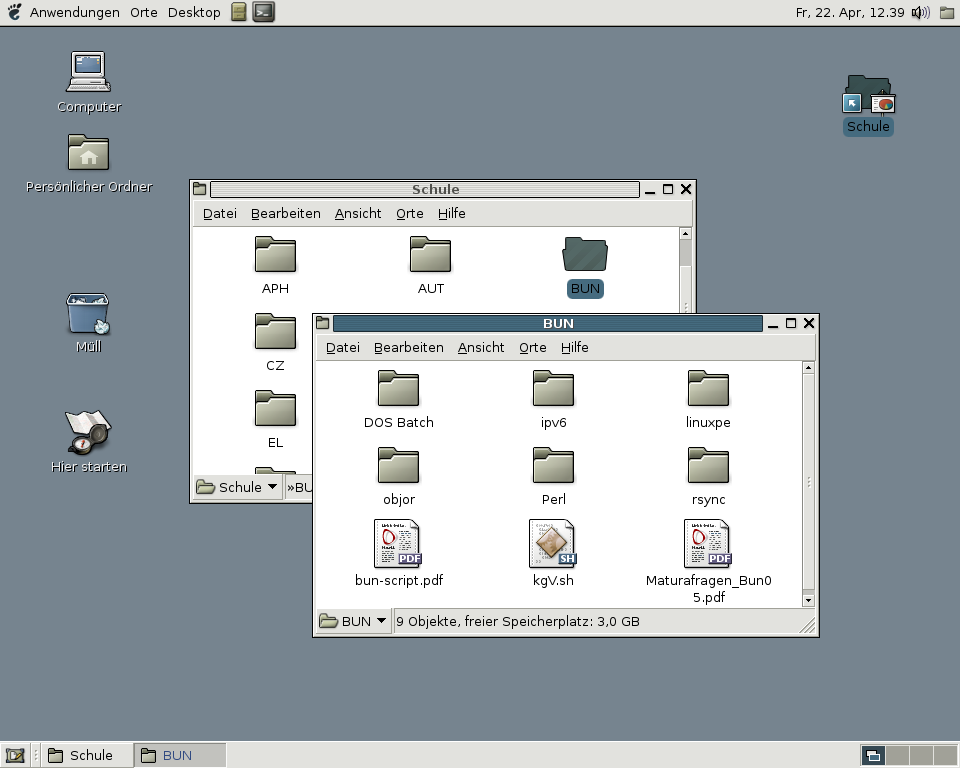
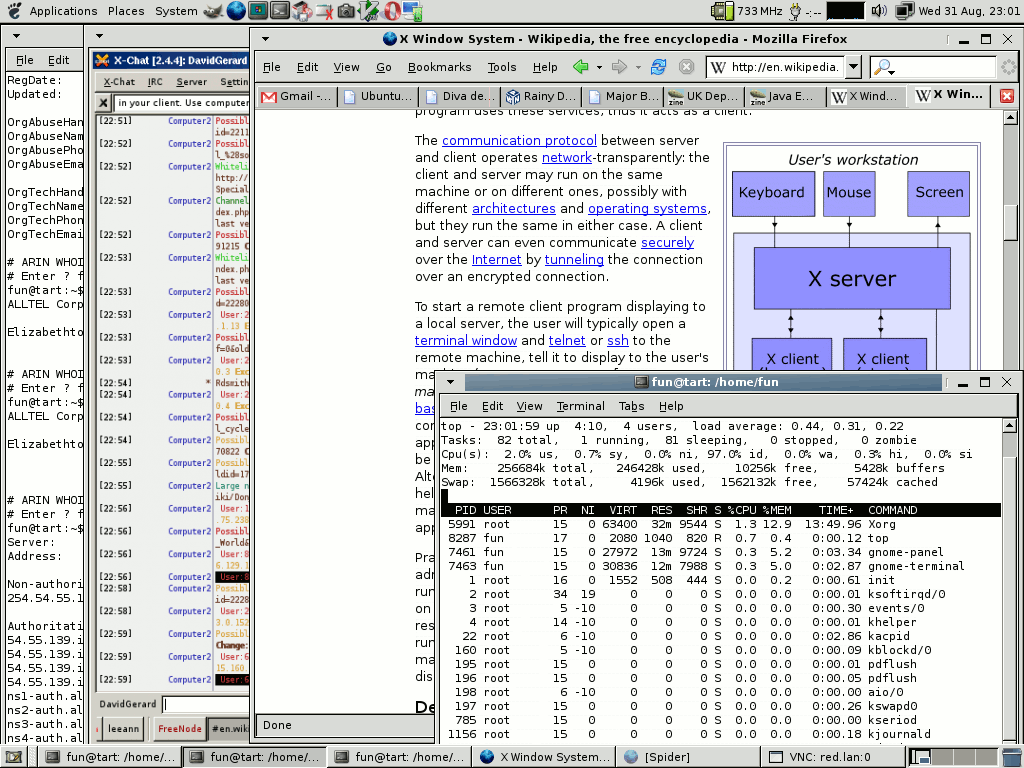
GNOME 2.10.0 Screenshot (GPL). First Screenshoot taken by b:de:Pythagoras1

.png?ref=tarakiyee.com)
The first desktop I used was GNOME 2 around 2003. I remember how it felt to see it for the first time: a panel at the top, a panel at the bottom, a menu in the corner, everything made sense. Everything else was held together with tape. I had an aging GeForce 2 GTI and the proprietary NVIDIA driver was in standing negotiation between me and the kernel, while Xorg stood to the side and did its own thing. I was doing my homework while the kernel modules recompiled, and if I was lucky, I'd get like 10 minutes of glorious game time before something crashed. Eventually I managed to get it stable enough that I was modding games.
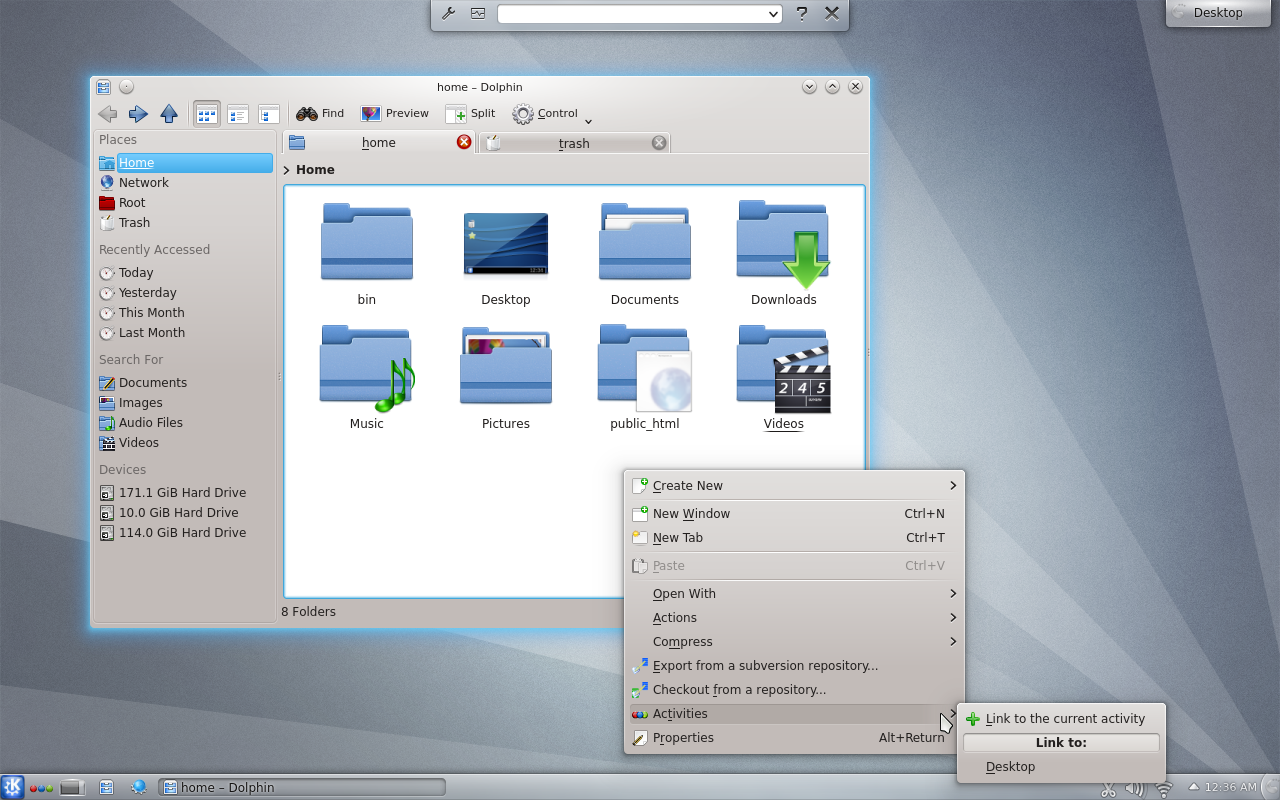
Gaming meant scouring the web for "free" games, emulators, and roms. I never managed to get Wine to work. Forums were where you learned things, and I was lurking in so many IRC channels, some of which I had no business being in. GNOME 2 was solid, though. I experimented with KDE during my university years, as you do, but unfortunately for me that was the KDE 4 era. Ambitious, beautiful, and not finished yet.
_showing_search_function_in_overview_mode.png?ref=tarakiyee.com)
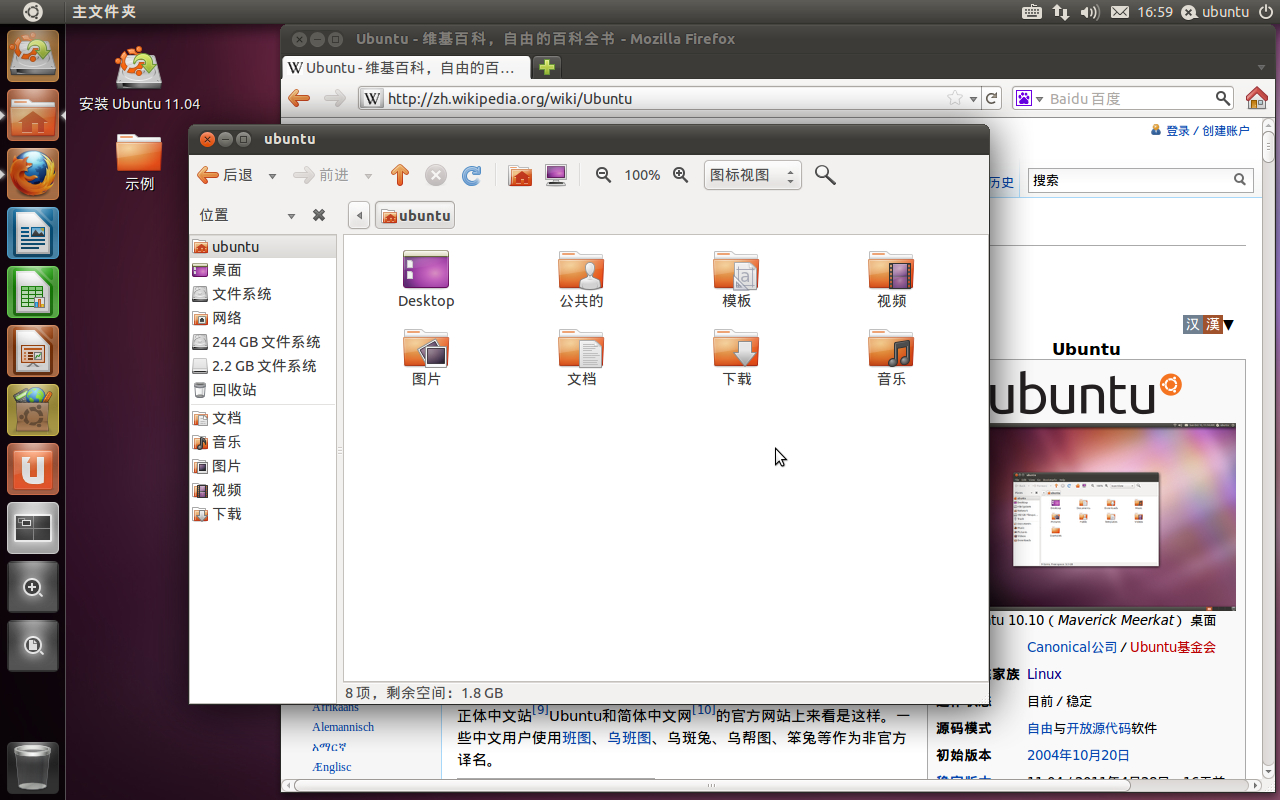
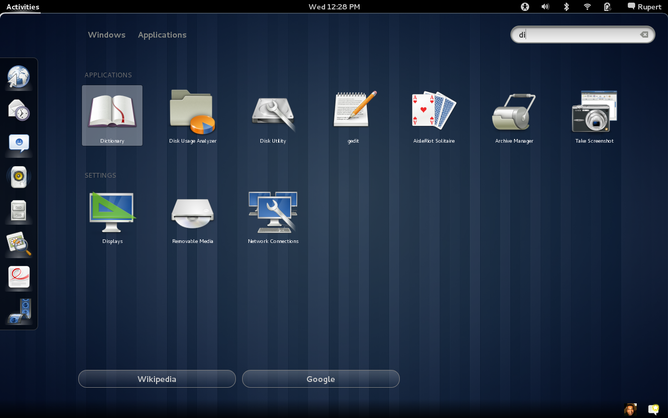
Then 2011 happened, a year of many upheavals. I graduated, had a bit of a political awakening due to a few things that happened at the time, but most consequentially, Ubuntu 11.04 shipped with Unity as the default. GNOME 3 also released the same month. In the span of a few weeks, both the Linux distro I've gotten used to, and the desktop environment I relied upon decided to become something fundamentally different.
Unity was a full-screen launcher that ran like a slide show on my hardware. GNOME 3 stripped the desktop metaphor down to a search-first workflow that assumed everyone wanted to find applications by typing their names (pretty rich complaint coming from me considering what I use now).
I gave Unity about a year. But it was slow on my hardware, and the design never clicked. I'm not going to get into what happened in 2011, but the cumulative effect was a heightened sensitivity to things being imposed from above. Maybe that colored how I experienced a desktop environment telling me to change my workflow. Or maybe the desktop was just bloated. Probably both.
i3 screenshot by B̅ - Own work, CC BY-SA 4.0, Linux Mint Screenshot by User:Mipinggrey -GPL, My own sway setup
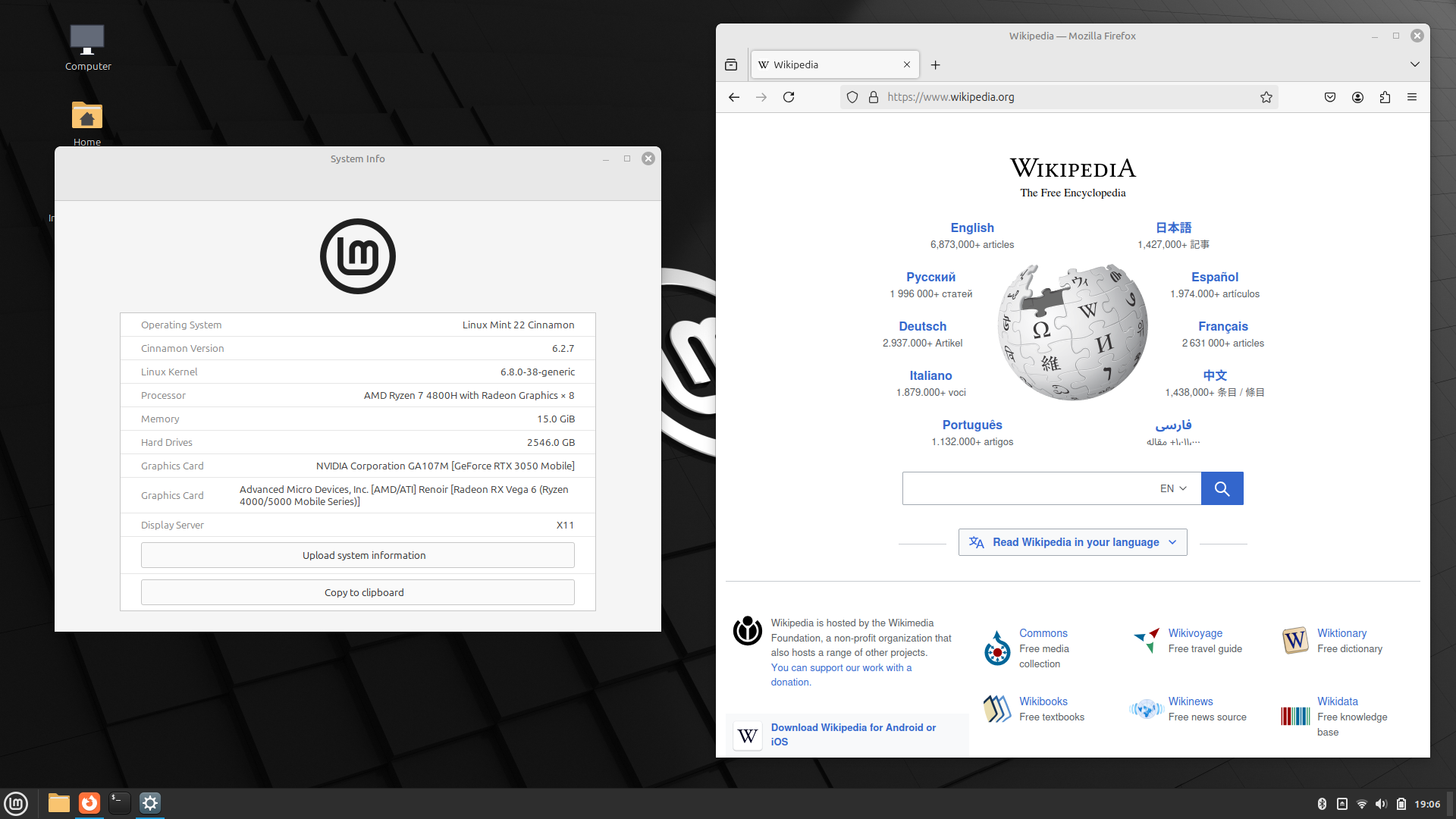
The following year, a colleague told me about Linux Mint and their desktop environment called Cinnamon, which essentially had GNOME 2's philosophy but built it on GNOME 3's technology. A traditional desktop with panels, a menu, a taskbar, no ideology about how you should work. Just a surface you could arrange things on.
Originally I had set it up for my grandfather and a couple of other family members, but I developed a fondness for it. I switched to Mint and stayed. Cinnamon became my desktop for over a decade. Through job changes, through moving countries, through a chaotic world, at some point I stopped experimenting with my tools and needed them to just work.
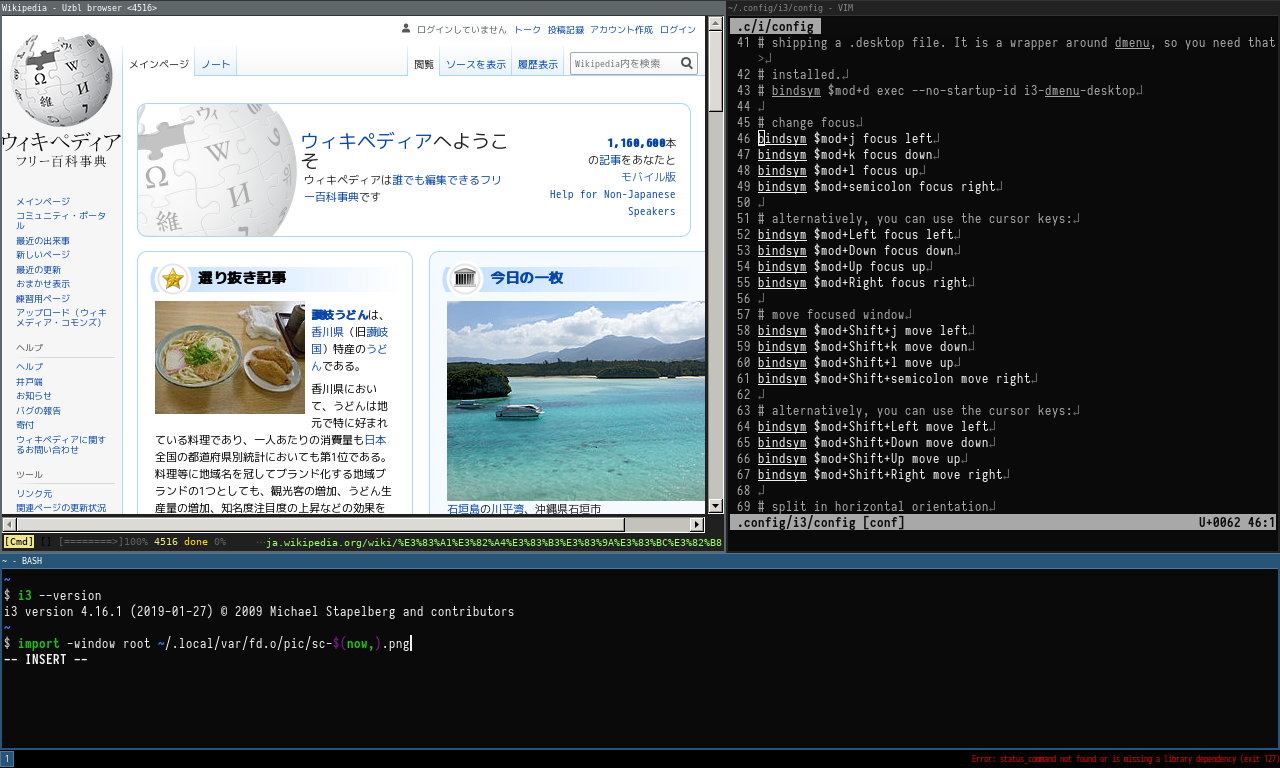
In 2012, a Swedish hacker showed me i3. A tiling window manager where every window snapped to a grid, controlled entirely by keyboard shortcuts, configured through a plain text file. It was fast. It was efficient. It required you to know what you wanted to do before you did it.
I loved the idea. I couldn't sustain the practice. Tiling demands a kind of discipline about your workspace that I didn't have at the time. I went back to Cinnamon, where I could drag a window somewhere vaguely useful and forget about it.
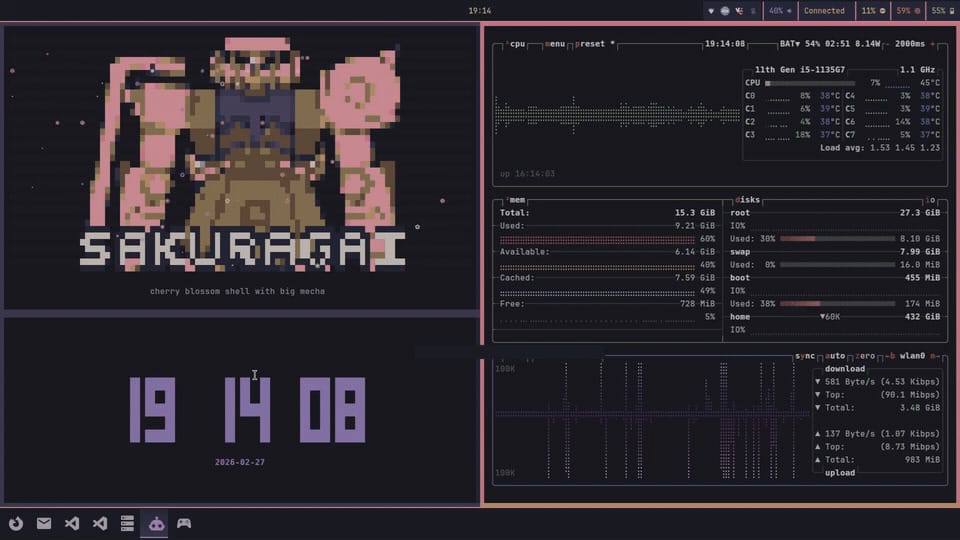
Thirteen years later, I decided it's time to start experimenting again, and started running Sway. The Wayland-native successor to i3, with proper multi-monitor support, smooth scaling, and a display protocol that doesn't fight you. I paired it with Debian Sid, the rolling unstable branch, because somewhere along the way I stopped wanting stability in my tools and started wanting to try out all those cool technologies I've been hearing about.
I don't fully know what changed. Maybe I'm more disciplined now. Maybe the tools are better. Maybe running Sway on Sid is just the almost-forty-year-old version of recompiling a kernel to get a graphics card working: choosing difficulty on your own terms, because you want to understand the thing, not just use it.
But a lot of things had to happen to make me regain the joy of experimenting with Linux Desktop environments. Wayland is the one that matters most structurally. It's a project to build an alternative to X11, the decades-old display server protocol that had long been the backbone of all those Linux graphical environments I've mentioned and more, with a simpler, more modern, and more secure version. The work on it started in 2012, but most people probably hadn't heard of it until recently.
It took around twelve years from specification to broad use, passing through Fedora defaulting to it for GNOME in 2016, Ubuntu adopting and retreating and adopting again, and KDE's Wayland session going from experimental to a daily driver. By the time Plasma 6 shipped in early 2024, built Wayland-first, X11 was the compatibility option. Not the other way around. Twelve years because replacing a display server that's existed in some form since 1984 takes a lot of time.
Gaming had its own quiet revolution. Proton landed in 2018, and it didn't work perfectly at first, but it improved fast. By the time the Steam Deck shipped in 2022, Linux gaming had gone from "technically possible if you fight it" to "install the game and press play." I simply had to get a Steam Deck, and I still symbolically carry it around when I travel even if I never actually get to use it. It's more of a religious artifact for me now, it really does feel like magic.
There's a lot more that happened too, I could write a whole blog post about the Flatpak ecosystem, but the gist of it, all of this is working great for me. Twenty-five years in, the Linux desktop is better than it has ever been. It's not yet there for everyone. Accessibility still needs the same patient, sustained effort that Wayland got. GNOME 50, releasing soon it seems, includes the most significant Orca improvements in years: a redesigned preferences UI, automatic language switching for speech, and browse mode that works beyond web content.
People have been predicting the "Year of the Linux Desktop" since I was burning CDs in my parents' house. It's a meme at this point. I think the framing was always wrong. There was never going to be a single year where everything clicked. There was going to be a long, uneven build where hardware support got good enough, then the display stack got replaced, then packaging got solved, then gaming became viable, then you look up and realize the landscape is fundamentally different from what it was fifteen years ago. The Linux desktop might be having a decade, and we might be somewhere in the middle of it.