
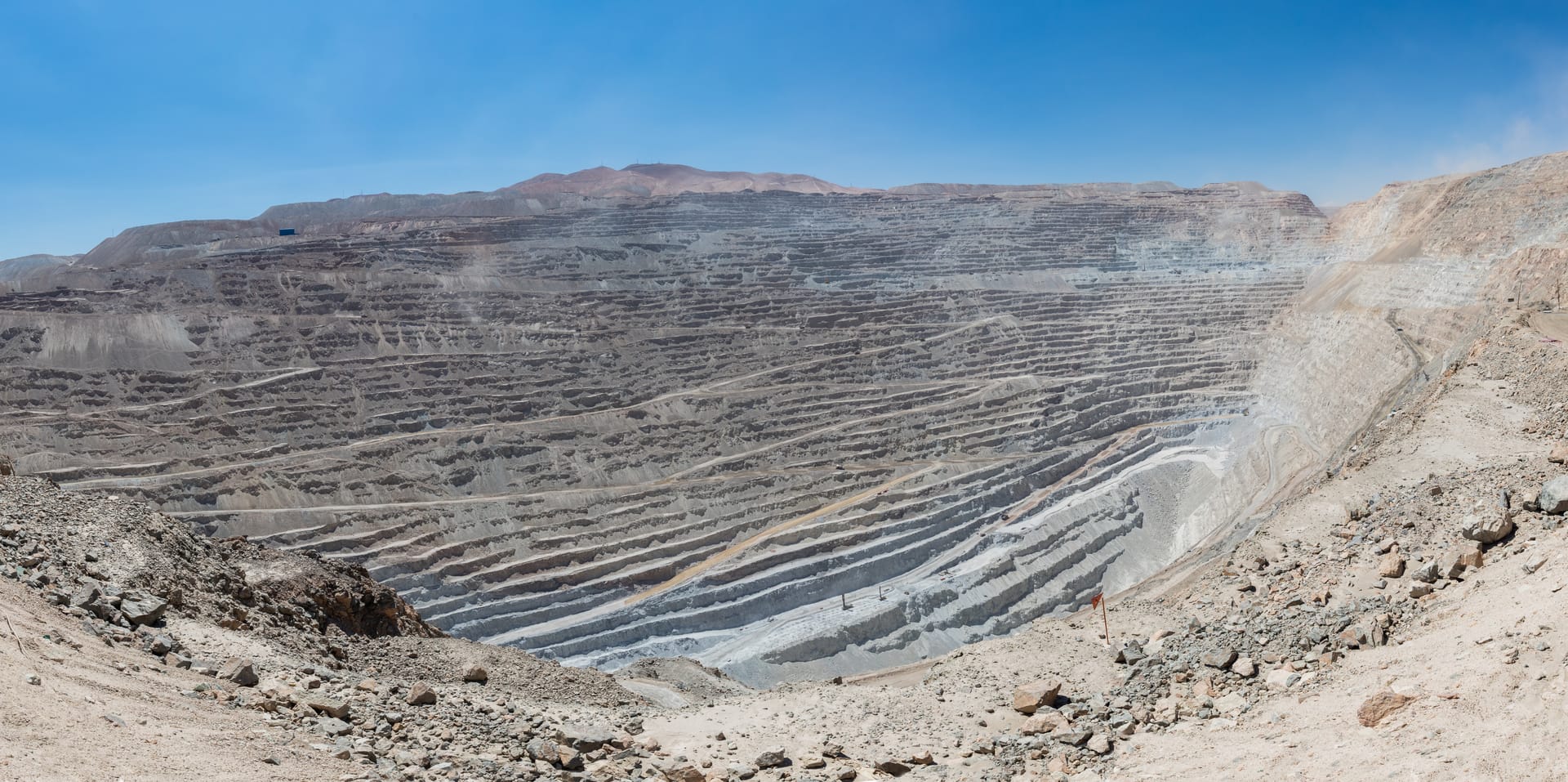
I recently had the pleasure of running a workshop called "Can We Build Hardware Without Capitalism?" at Cables of Resistance. It was billed as a crash course in the material politics of computation, and the point wasn't to answer the question in the title. It was to build a shared language for asking it.
The title isn't bait. I genuinely don't have a definitive answer, and I don't trust anyone who claims to, one way or the other. But I feel a renewed urgency about it, and you might reasonably wonder why an open source software nerd is suddenly this preoccupied with hardware. To explain that I have to be a bit vulnerable. The truth is I've spent this year struggling with a deep disillusionment, a grief really, around open source. That's where this starts.
Blessed Is the Machine
Working in open source software, I've always felt like I was part of something bigger, something trying to make the world a better place for people. I worked on the things I could change, and trusted that others who shared the same values were working on theirs. I wasn't fully naive, or I hope I wasn't. I tried to learn the limits of what my work could do, but knowing them never demotivated me, because I also believed that even where it wasn't true yet, you can build good software for people without exploitation or harm. Or to put it plainly, we can build software without capitalism.
The success of open source has two sides. On one hand, it proves that producing software openly and collaboratively doesn't just work, it can produce something more reliable and sustainable than the closed version, something that makes people's lives better. On the other, everyone draws on this common infrastructure while some are far better placed to extract value from it than others, big corporations most of all. That never sat right with me, and the scale of it was daunting, but it didn't break me.
Then came the big LLMs, and they came for the heart of what makes open source work. Not the licences, but the collaborative mode of production. The new tools are effective at the hard things, the whole feature, the refactor, the unseen bugs, and they're faster than the slow work of bringing someone new along. So the small first contribution that used to be the way in stops being worth much to anyone, and the person who would have made it never gets the chance to engage with the software long enough to learn what their predecessors did. And it was already fragile before the tools arrived, down to a few tired people holding up things the rest of us only use.
And the worst of it is that this isn't only being done to us, it's being done by us. The people holding the projects up are reaching for the same tools, maintainers who know the power and the water a model burns through, the labour it was trained on without asking, yet reach for it anyway, perhaps because they're exhausted and the work doesn't stop. I feel that exhaustion too. But it did cause me a bit of an existential crisis. I no longer feel like I'm part of a bigger movement to make things better. Instead, I feel like I'm part of building the Machine. Let me explain.
In 1909, before broadcast radio and decades before television, E. M. Forster wrote a short story called The Machine Stops. (I'm about to give away the ending, so treat this as your spoiler warning for a story from 1909.) People live alone in small underground rooms, every need met at the press of a button, speaking to one another only through glowing plates, their bodies gone soft and first-hand experience a thing they've learned to fear. Over the generations they come to worship the Machine that runs it all, reciting the Book of the Machine and forgetting that human hands ever built it. The screens, the messaging, a whole civilisation resting on infrastructure it no longer understands: an astonishing thing to have seen coming.
There are two people in the story. Vashti is at home in the Machine, and on the rare occasion of an air-ship journey, she turns away from the window, so as not to look at "the horrible brown earth, and the sea, and the stars when it is dark." "I get no ideas in an air-ship," she says. Her son Kuno wants out. He would rather see her with his own eyes than through the Machine, and he reminds her, "Men made it, do not forget that." On the same air-ship that gives his mother nothing, Kuno looks up and sees a giant laid out in the stars, shoulders and knees, a belt, a sword. We would call it Orion. He has no name for it. Later in the story he reaches the surface and comes alive there, and he begins saying the thing no one wants to hear: that the Machine is stopping, that it is the humans who are dying and the only thing still alive is the Machine.
That is the Machine I feel like I've been roped into building, and I know I'm not the only one who feels it. However, it doesn't change what I believe: there's a better way to make software. But software has another layer underneath it, it needs hardware, and beneath the hardware layer lies the answer: are we the ones dying, or is it the Machine?
What the Machine Runs On (Capitalism)
Capitalism runs on cheapness (do not read that as "efficiency"). Jason Moore argues that the whole system stays upright by keeping four things cheap: labour, food, energy, and raw materials. Cheap here doesn't necessarily mean that the cost is lower, but rather that it lands on someone who can't refuse the cost, so that the surplus value between what is paid and what it costs can be collected by someone else. A cobalt miner on two dollars a day isn't a market failure waiting to be corrected, it's capitalism working as designed.
Glen Coulthard says that you can't be against capitalism without being against colonialism, because the cheapening is itself the colonial act, turning a person into labour, a place into raw material, a living system into fuel, and calling the result a resource, or as Eduardo Galeano said it, that the wealth of some has always been made out of the poverty of others. This cheapening is often hidden from the people who buy the finished thing, but it's not hidden from the people it happens to.
When capitalism is forced to reform, it doesn't change the underlying relation. It just relocates the injury. The green transition traded fossil fuels for lithium, so when the minerals changed, the harm was transposed. Now the Atacama desert is being drained for the rest of the world to have clean energy. Reform that shifts the harm around while leaving the relation intact is capitalism's gentle answer to placate its softest critics, and it is very persuasive.
A Vocabulary for the Machine's Harms
To try and see whether hardware production and capitalism are intrinsically intertwined, I had a plan for this workshop. We needed a common vocabulary to talk about the conditions that enable its harms. So for the practical part of the workshop, I handed out the following six structural conditions of capitalist hardware production.
- Extractivism. The mining the whole machine stands on.
- Fabrication concentration. Almost every advanced chip is made by a handful of companies in a handful of places.
- Supply chain opacity. A chip crosses seventy borders, yet almost no one can say where its parts came from.
- Information asymmetry. Hardware, unlike software, does not carry its own blueprint.
- Vendor lock-in. A printer that will not print without a subscription.
- Displaced harm. The people who bear the cost are never the people who benefit.
It is not meant to be a taxonomy, but prompts, so that we can explore the question. For that, I had people rank the six from most fixable to least fixable and argue about it in groups. The second part of the workshop asked which of these each person's own corner of the world refuses to look at, and why.
There was general consensus in the room about how to rank them. Vendor lock-in and information asymmetry came out most fixable, because everyone could see the lever: right to repair, mandated documentation, enforceable laws. Extractivism and fabrication concentration sat at the bottom, filed under too big, too physical, too far away to move. The condition people struggled most to place was displaced harm, because it isn't really one condition beside the others, it's the pattern the other five make together.
The answer to the second question was sharper. Almost everyone mentioned the extraction. One person put it as focusing on what feels fixable and looking away from what feels structural. The format was built to keep the question open and resist a tidy answer, and mostly it held. I had my feedback, and I plan to work on updating the harms vocabulary and maybe run a longer format workshop in the future to dig into the most intractable parts. I was frankly excited by how many wanted to explore the question with me, and that gave me hope for the first time in months. Yet a few participants still reached for the gentler reform answers the workshop was designed to resist, and that made me think.
Does the Machine Stand, or Stop?
For those who want an easy exit out of the existential disillusion with the Machine, there are a few options.
Benjamin Bratton actually mapped our real-world Machine, except he calls it the Stack. He was among the first to describe computation at a planetary scale as a single thing: an accidental megastructure, six layers deep, running from the energy and the minerals at the bottom up to the person holding the phone at the top. If Forster imagined the Machine, Bratton drew the one we actually built.
He does not look away from the ground beneath it. The Stack, in his account, eats minerals and energy on a scale nothing else we've made comes close to: the cobalt out of the Congo, the water, the power, the harm that stays invisible to the people holding the finished devices. But his book is a map, and a design brief. It asks how the Machine might be run, governed, redesigned, and it sets aside the older question of whether it should stand at all.
That posture, the Machine as a foregone conclusion and a necessity, is the first way out. The thing is here, it is not going anywhere, and the only serious question left is how to run it well. It is a great comfort, but one you have to be able to afford, and from underneath it the Machine as a settled fact is just one more thing being done to you.
The other way out is the opposite, and it is the one Forster's story seems to offer. The Machine stops. It seizes up, it fails, and the failing comes almost as a mercy: Kuno and Vashti die in the dark, but they die having "recaptured life." It is a beautiful ending. It is also the thinnest part of the story. Forster shows us the collapse in full and frames the redemption in a single breath. The people who inherit the clean sky, we never actually see.
But simply waiting for the collapse to make way for an imagined better future is not a way out either. It borrows all its meaning from a tomorrow that arrives only after everyone in the room is dead.
There is capitalism's gentler answer. Care, maintenance, repair. Keep the machines longer, fix instead of replace, tread more lightly. Forster has a name for this too. In his world there is a Mending Apparatus, the system that keeps the Machine running, and over the generations people come to revere it almost as much as the Machine itself, right up until it too breaks down and cannot be mended. Repair conserves the thing it repairs. To be honest and fair, it's also the most decent answer on the table. I can't blame people for reaching for it.
Yet none of the three is a way out. The Machine that stands because someone competent is running it, the Machine that falls and frees us, the Machine kept in good repair. The Machine itself does none of these. It doesn't hold and it doesn't stop and it isn't waiting to be mended. It just stands, and keeps standing.
There Is No Innocent Ground for the Machine to Stand On
There is no innocent ground under the Machine. The minerals come from somewhere, and the somewhere has people on it, and water, and a way of governing itself that the company coming to dig never asks. What we call the material layer is land already inhabited and governed and claimed, long before it was anyone's resource, and it became a resource by counting the people who lived there as part of what could be taken.
Which means none of the answers reach it, and this is the part I most wanted the technologists in the room to see. A cleaner mine, an open licence, a machine built to last twenty years instead of two, all of it can be real and the thing is still not decolonial if the people whose land and water it runs on cannot make it stop.
But if a satisfactory answer doesn't exist, where does the motivation to do the work come from? For me, the question itself is the new motivation. And to tackle a question like whether we can build hardware without capitalism, there are three traditions worth noting here that I believe are needed. One says you don't owe anyone a picture of the world that comes after, that the work is to refuse this one clearly, and the drawing of the alternative is not yours to produce. The second says the things we want to be rid of, the state, the system, are not just objects you smash but relationships, ways we've agreed to treat one another, and you undo them by treating one another differently.
The third comes out of decolonial and Indigenous thought, and it says the injury is territorial before it is anything else. What was taken was land, water, jurisdiction, the authority of a people over the place they live, and none of that comes back by refusing capitalism more clearly or by relating to one another more kindly. It comes back by being returned. Anarchists developing better relations to each other or Socialists refusing where they stand do not reach it, because the thing owed is not better behaviour, it is the ground itself.
I still can't say I have an answer to the question in the workshop's title, but here's what I want people to take away from it. If we as technologists really believe technology can make people's lives better, then it isn't enough to refuse the bad tools, and it isn't enough to find kinder ways of relating to one another. There is no innocent ground under the Machine waiting to be built on. It has to be given back first. The land returned, the water returned, the people a thing is built on able to refuse it and have the refusal hold. Those are not engineering or design problems, and while it's tempting to hand it to someone else and get back to your work, not all of us get to do so. A technologist who builds the Machine anyway is just building it on stolen ground.
In The Machine Stops, Kuno is not the only one who got out. There are people living outside the Machine, up on the surface, the ones who were cast out or walked away and did not die. Forster calls them the Homeless. They are the most interesting thing in the story, and he tells us almost nothing about them. They wait at the edges of the plot, and then the story leaves them there, but it seems like they found the answer. I have hope that we can find an answer too, but I can't do that thinking from inside the Machine. That's the thing I learned about myself this year. I get no ideas in here. I need to be on solid ground, looking at the stars.
This is not a question anyone works out alone. If it's yours too, I'd like to hear from you.