
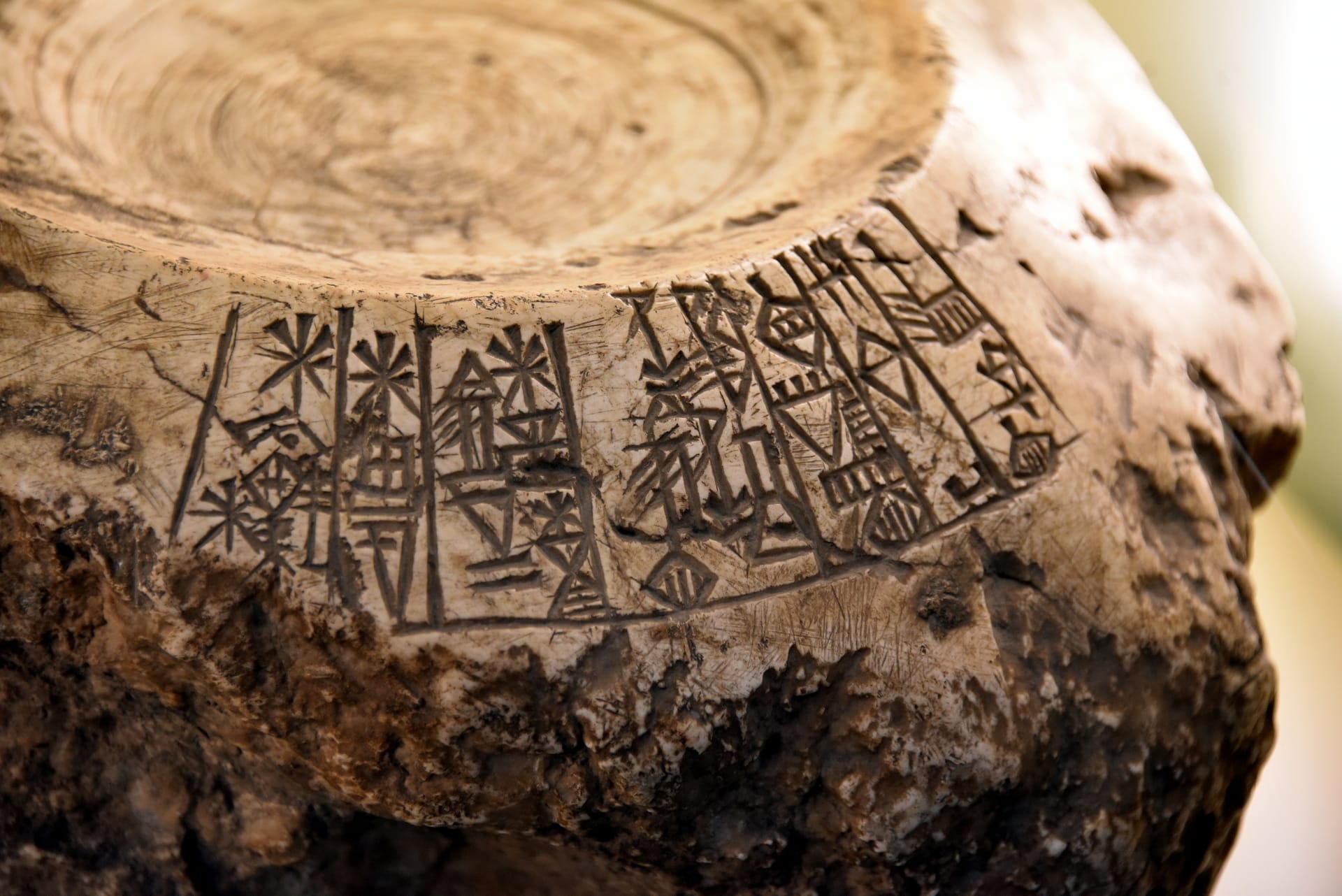
Cover Photo: Detail, door-hinge, inscribed with the name of Entemena of Lagash, c. 2400 BCE, from Iraq. Pergamon Museum, Berlin, Germany. CC-BY-SA 4.0 Osama SM Amin FRCP
FOSDEM is a two day event where the Free University of Brussels (Specifically the ULB, or Université libre de Bruxelles, not to be confused with VUB, the other Free University of Brussels, because Belgium) hands over its Solbosch campus to thousands of FOSS enthusiasts celebrating, discussing and learning about their favourite technologies. It's driven by volunteers, and I've been going for the past three years. There are no tickets, lanyards or badges, just a whole lot of talks and presentations across two main tracks, 66 devrooms, lightning talks, Birds of a Feather sessions, and a junior track.
Since my first FOSDEM, I decided that I don't want to just be a participant, and I started organising a devroom with an amazing bunch of people. Devrooms are essentially conference tracks that center around a certain topic or technology related to FOSS. It's completely self-organised, from picking topics, to coordinating with speakers, as well as running the room on the day of. FOSDEM provides the space, as well as the setup for livestreaming, and they do that for all 66 devrooms and both main tracks.
The week before FOSDEM is increasingly becoming a busy one, with it ballooning to what is now being called the EU Open Source Week, which is all important, but for me, the main event will always be FOSDEM. I'm sure there are several other events with the same collaborative spirit, but for me I haven't felt this good about an event since the World Social Forum I attended in 2015.
This year, and last year as well, the devroom started off great, all the speakers made it despite the weather and strikes, the room was set up early, and minor arguments with the projector were quickly settled. As the first speaker started, people kept streaming into the lecture room, and with each person entering there was a loud creak. Now, I'm particularly sensitive to noise, but in this case I think it was also disrupting the speakers.
I moved to the outside of the room, and started nicely directing people to the other door leading to the room. It had a much more enjoyable cartoonish door creak, and was on the other side of the stage away from the speaker. I also reported the situation on the organisers chat, not expecting anything, but perhaps hoping against hope that this is something we can solve.
I was getting incredibly annoyed by myself standing next to the door, being a gatekeeper of any sort never felt natural to me. But lo and behold, no less than a minute after I wrote my message, I got the reply that they will try to find the right kind of oil. And true to their word, I had a bottle of machine oil in my hand before the next talk had even started. The timing worked out well, I oiled (both) doors between talks, and only had to reapply once, and we quickly had two functioning doors.
I'm a sucker for metaphors for FOSS, and I couldn't help but quickly recognise this as another great one. Sure, individually, many of the people in FOSS or at FOSDEM are great engineers, artists, writers, organisers, and administrators but what brings them all together is that they keep oiling the doors so others can come in. Whether you're working on documentation, or reviewing pull requests, working on design, improving accessibility, writing down plans, reviewing security, or making sure people get paid for their work, we're all just oiling doors for each other.
I get annoyed when I hear the phrase "FOSS is punching above its weight", because I feel like it fails to capture the true weight of FOSS. If you're measuring its weight by number of features, or lines of code, or GitHub stars, or dollars, or pull requests, or closed issues, or commit counts, or release tags, or Hacker News upvotes, or Stack Overflow answers, or download numbers, or Docker pulls, or npm installs, or CVEs patched, or mailing list threads, or IRC messages, or forum posts, or roadmap items, or conference talks, or stickers distributed, you might get the wrong picture.
That analogy also seems a lot less impressive when you consider that the "competition" FOSS is punching up against is a bunch of companies aggressively competing on who can waste the most of our planetary resources in order to make stonk go up and shareholder happy.
When you experience spaces like FOSDEM, whether in-person or online (because we have to acknowledge that the fosdem flu is real and many of us can't risk it), you get to see a sub-section of the true weight of FOSS, which is all the people that keep the doors oiled.